mohammadali Ghaemifar, محمد علی قائمی فر

Mohammad Ali Ghaemifar

Electrical engineer

what's in my mind

In my mind, my foremost goal is to complete MS program and embark on a Ph.D. journey in a developed country. Second, I'm dedicated to making significant progress on my MS thesis. Third, I'm excited about our recent paper submission to IEEE Access. Fourth, I'm eager to gain more experience as a teaching assistant. Lastly, I'm committed to expanding my knowledge in Control Systems, Robotics, and Artificial Intelligence, fueling my passion for innovative research and education.

about me

about me

I'm Mohammad Ali Ghaemifar, a passionate student in the field of Electrical Engineering, specializing in Control Systems. Currently, I am pursuing my Master's degree with a focus on my thesis. Allow me to share my academic journey with you. My academic pursuits revolve around technologies and complex control systems. Specifically, I am deeply interested in the following areas:

  • Control Systems
    • Non-Linear Control
    • Adaptive Control
    • Optimal Control
    • Fuzzy Control
    • Stochastic Control
  • Artificial Intelligence
    • Machine Learning
    • Reinforcement Learning
    • Deep Learning
    • Robotics

personal details

Full Name : MohammadAli Ghaemifar
Address : IUST, Heydarkhani St., Resalat Hw, Tehran, Iran
Phone : +98 9331588698
Email : m_ghaemifar@elec.iust.ac.ir
Website : http://maghaemifar.ir

My Skills

My Skills

I am skilled in a range of programming languages, including Python, C++, Matlab, and Arduino. Additionally, I am experienced in utilizing various technologies, such as Simulink, Proteus, Pspice, Altium Designer, and LabVIEW, to support my academic and research endeavors

languages skills

I am a native Persian speaker with a deep understanding of my mother tongue. Additionally, I have honed my English language skills to a proficient level. I am currently preparing for the IELTS exam, and I am dedicated to achieving a high score as soon as possible. My passion for language learning drives me to continually improve my English proficiency, and I look forward to showcasing my language abilities through the IELTS examination

PERSIAN
ENGLISH

education

education

In pursuit of academic excellence, I have undertaken an educational journey. Here, I present my academic qualifications and achievements, showcasing my commitment to learning and growth.

Publications

My Portfolio

Ghaemifar, Mohammad Ali and Javadi, Ali,1401,Hopes and Challenges in Combining UWB and Deep Learning,The first conference of electricity, mechanics, aerospace, computer and engineering sciences,https://civilica.com/doc/1625551


My paper addresses the critical challenge of controlling a single-master and three-slave teleoperation system employing adaptive synchronization. Despite contending with formidable obstacles such as time-varying formation, modeling uncertainty, environmental torque, and time-varying delay, our proposed method demonstrates commendable tracking performance.

What sets this approach apart is the assurance of system stability, affirmed through rigorous Lyapunov stability analysis. In analytical simulations, the adaptive synchronization technique emerges as a compelling solution for the precise control of cooperative teleoperation systems.

This research contributes to the ever-evolving landscape of teleoperation systems, offering a practical and effective means of achieving control and synchronization even in the face of formidable real-world challenges. It represents a significant stride forward in the field, underscoring the potential of adaptive synchronization techniques in advancing the capabilities of cooperative teleoperation systems.


A.Khanzadeh, S. Ganjefar and M. Ghaemifar, " An adaptive controller for cooperative teleoperation system with time-varying delay and formation, "11th RSI International Conference on Robotics and Mechatronics (ICRoM 2023), submission in 18/09/2023, presentations in 20/12/2023.


In my published paper, I explore the powerful synergy between ultra-wideband (UWB) technology and deep learning algorithms, opening up exciting possibilities across various domains of wireless communication and real-time monitoring.

The integration of UWB technology with deep learning introduces a game-changing dynamic to several critical applications. Firstly, it significantly enhances Quality of Service (QoS) in UWB-based networks. Secondly, it bolsters security measures in UWB networks, fortifying defenses against potential threats. Thirdly, in densely populated environments, it enables efficient multi-user detection, optimizing network performance. Moreover, it empowers real-time monitoring, offering rapid data transmission, energy efficiency, security, and reliability.

Deep learning algorithms serve as the backbone for addressing complex challenges in UWB technology. They effectively tackle network congestion, interference issues, thwart hacking attempts, prevent eavesdropping, and excel in the detection and classification of multiple devices within UWB networks.


Improving Indoor Positioning with UWB Technology and Advanced Methods

We are currently conducting a study on Indoor Positioning Systems (IPS) using Ultra-Wideband (UWB) technology. Our research focuses on understanding the challenges in this field, particularly in identifying signals in situations where there are obstacles (NLOS) or direct line of sight (LOS).

To improve accuracy, we are exploring advanced techniques like machine learning and deep learning algorithms. These methods help reduce errors in indoor positioning. Our goal is to make IPS more precise for various applications, such as smart homes and industrial automation.

Our research aims to provide valuable insights into UWB-based indoor positioning, addressing challenges and showcasing cutting-edge solutions. We are dedicated to advancing this field and enhancing the reliability of positioning systems.
testomonials

testomonials

I acquired essential skills such as Python, Matlab, and Proteus through self-study, demonstrating my proactive learning ability. Additionally, I've completed relevant courses, which I'll detail further ahead

Image
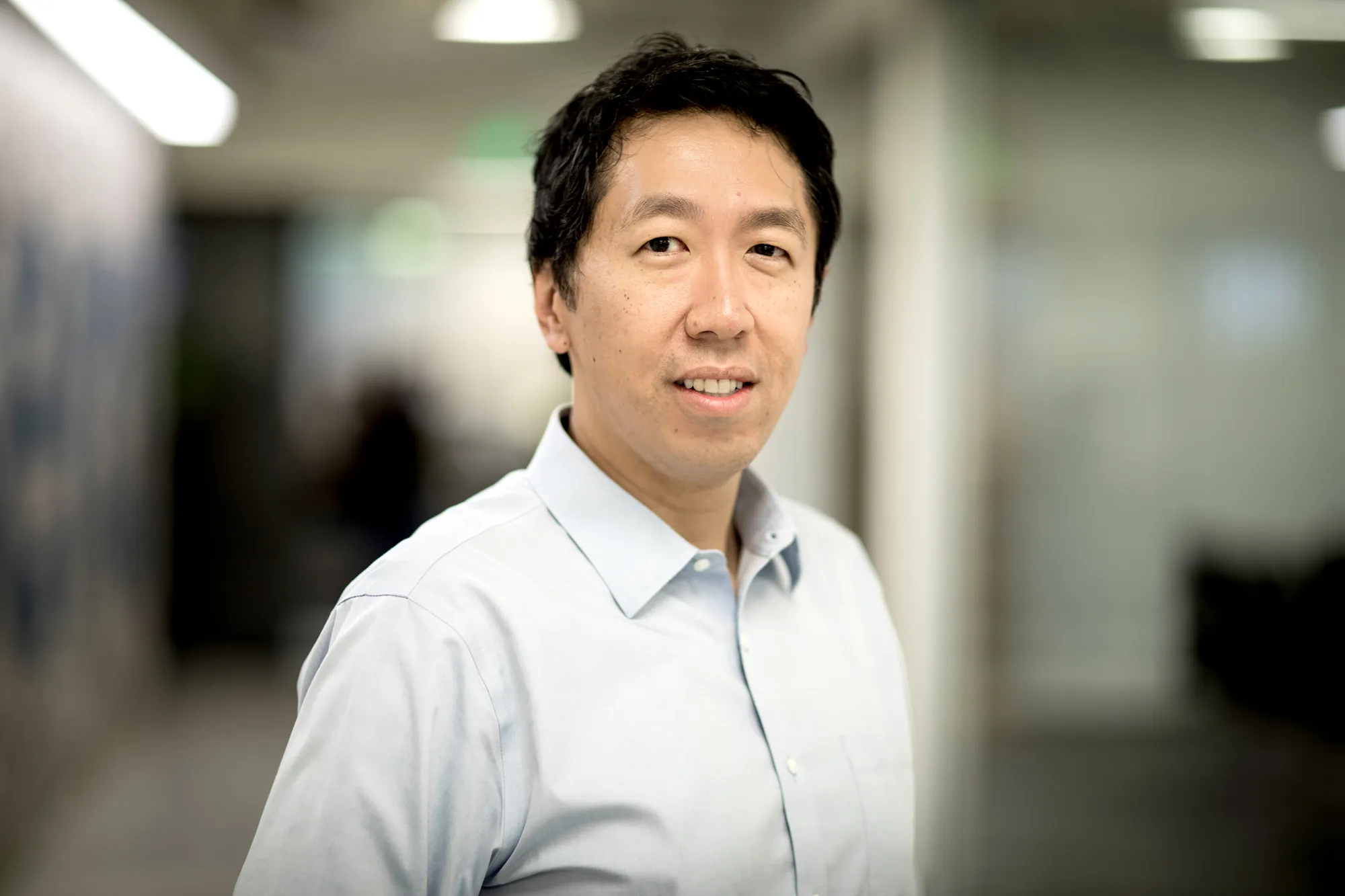
Andrew NG(Instructor)

Neural Networks and Deep Learning: This Coursera course by Andrew Ng covers fundamental concepts and applications of neural networks and deep learning.

Improving Deep Neural Networks: Another Andrew Ng course on Coursera, it focuses on optimizing neural networks with hyperparameter tuning and regularization.

Structuring Machine Learning Projects: This Coursera course by Andrew Ng teaches strategies for effectively structuring and managing machine learning projects.

Convolutional Neural Networks: An Andrew Ng course on Coursera that delves into the theory and practice of convolutional neural networks, crucial for image processing.

Sequence Models: Coursera's Andrew Ng instructs this course, exploring sequence models like RNNs and LSTMs, important for tasks like natural language processing.

https://www.coursera.org/

LabVIEW Software Certificate: Earned from Technical & Vocational Skill in Esfahan, Iran, this certificate signifies proficiency in LabVIEW software, commonly used in engineering and research.

Experience

Work Experience

In my academic journey, I've had the privilege of serving as a Teaching Assistant in both undergraduate and graduate programs. These experiences have allowed me to nurture a deep passion for education and mentorship while contributing to the academic growth of students in Control System. These responsibilities honed my teaching and administrative skills

Linear Algebra, B.Sc. Course

  • Fall 2023 - Current

As a Teaching Assistant, I played a pivotal role in the academic process by providing support such as problem-solving assistance for students, overseeing exam administration, and meticulously evaluating and correcting exam papers.

Stochastic Control, M.Sc. Course

  • Fall 2023

my responsibilities were multifaceted. I created and crafted exam questions, meticulously reviewed course materials and textbooks, administered examinations, and provided invaluable guidance to students by addressing their queries and offering MATLAB-based solutions. These tasks enhanced my instructional skills and deepened my understanding of stochastic control concepts, fostering a dynamic learning environment for students

Machine Learning, M.Sc. Course

  • Winter 2023

During my tenure as a Teaching Assistant for a Machine Learning course, I undertook responsibilities. crafted twenty educational PowerPoint presentations, enriching students' understanding of machine learning concepts. Additionally, I orchestrated the examination process, evaluating and providing feedback on students' exam papers. Moreover, I actively engaged in instructing students in Python-based machine learning, imparting essential coding skills. Lastly, I meticulously assessed and graded Python exercises, ensuring students' comprehension and progression in this intricate field. These multifaceted roles allowed me to foster a deeper appreciation for education and empower students in their academic pursuits.

Linear Control, B.Sc. Course

  • Winter 2023

This included conducting online classes, providing clarifications on course materials, and elucidating intricate concepts. I actively contributed to the course's success by crafting a variety of exam questions and in-class exercises to enhance student comprehension. Additionally, I meticulously assessed and graded examination papers, ensuring a fair and consistent evaluation process for all students. My commitment to fostering an engaging learning environment and facilitating students' grasp of the subject matter was a hallmark of my role in this educational capacity.

03 Honors

1 Ranked among all 2016 graduates in Electrical Engineering

1 Ranked among all 2020 graduates in Control Systems

3.8
Cumulative GPA

Selected Courses

Latest News

Now, I share some of the courses I'm interested in. I also provide brief descriptions of each course to help you find ones that match your interests. Feel free to explore these courses to discover subjects that excite you

Image

Reinforcement Learning in Control

  • Dr Saeed Shamaghdari, Iran University of Science and Technology
  • Fall 2021
  • References: Reinforcement Learning: An Introduction by Andrew Barto and Richard S. Sutton, Algorithms for Reinforcement Learning by Csaba Szepesvari and Optimal Control by Vrabie, Lewis, and Syrmos
Course Description:

Reinforcement Learning in Control is a comprehensive course that delves into the application of Reinforcement Learning (RL) techniques in the field of control systems. The course begins by exploring the foundational concepts of Markov decision processes, providing a solid theoretical background. Students are then introduced to dynamic planning methodologies, including dynamic programming and temporal-difference learning, which are essential for optimizing control strategies. A significant focus of the course is on utilizing RL to tackle complex control problems, such as solving the Linear Quadratic Tracking (LQT) and Stochastic Linear Quadratic (SLQ) problems. Additionally, students gain insight into the realm of zero-sum games, understanding their relevance in control applications. One of the unique aspects of this course is the practical implementation of these concepts using both Python and MATLAB. Through hands-on projects and exercises, students develop the skills necessary to apply RL algorithms in real-world control scenarios. By the end of the course, participants are equipped with a deep understanding of RL in control and the ability to implement solutions effectively."

Projects:

In addition of exams , weekly exercises Study and Repeat the results of the following articles in Matlab. • Reinforcement Q -learning for optimal tracking control of linear discrete-time systems with unknown dynamics • Output feedback Q-learning for discrete-time linear zero-sum games with application to the H-infinity control • H∞ control of linear discrete-time systems: Off-policy reinforcement learning


Achievements:

Successfully completed the course 'Reinforcement Learning in Control' with an outstanding GPA of 4/4, showcasing a strong grasp of the course material. Gained a profound vision of Reinforcement Learning in Control, equipping me with the knowledge and insight to apply these concepts in practical scenarios. Significantly enhanced coding skills through the implementation of reinforcement learning algorithms in Python and MATLAB, reinforcing my ability to tackle complex control and automation challenges.

farokhi

Fuzzy Control

  • Dr Mohammad Farrokhi, Iran University of Science and Technology
  • Fall 2020
  • References: Fuzzy Modeling and Fuzzy Control by H. Zhang and D. Liu, Fuzzy Control, Addison-Wesley Longman by K. M. Passino, S. Yurkovich, A Course in Fuzzy Systems and Control by Li-Xin Wang and Fuzzy Modeling for Control by R. Babuška
Course Description:

The course in Fuzzy Control delves into the fascinating realm of fuzzy logic and its applications in control systems. It begins with a solid foundation in the principles of mathematics and fuzzy logic, providing students with the necessary mathematical tools to understand and design fuzzy systems. Throughout the course, students explore the characteristics of fuzzy systems and gain insights into their design, covering both adaptive and non-adaptive approaches. The curriculum spans various control scenarios, including linear and nonlinear systems. Students learn to develop stable fuzzy controllers, optimize control strategies, and enhance robustness in control systems through the application of fuzzy logic. The course also delves into advanced topics such as fuzzy-sliding control and supervised fuzzy control, equipping students with the skills to handle complex control challenges. Additionally, students explore adaptive fuzzy control techniques for linear systems, providing a well-rounded understanding of fuzzy control methodologies. Upon completion, students are well-prepared to apply fuzzy control principles to real-world systems, offering a powerful toolset for solving intricate control problems across diverse industries. Projects: In addition of exams and weekly exercises we had two main Coding

Projects:

1. Fuzzy PID Control of a Pendulum System: Robustness and Performance Analysi 2. "Predicting Chaotic Time Series of Mackey-Glass Using Fuzzy System Based on Lookup Table"


Achievements:
I successfully completed the Fuzzy Control course with a remarkable GPA of 3.8/4. Throughout the program, I engaged in rigorous coursework, including mentioned projects These projects not only demonstrated my grasp of fuzzy control principles but also showcased my ability to apply them to complex real-world control challenges. This achievement reflects my dedication and proficiency in the field of fuzzy control.

Image

Stochastic Control

  • Dr Saeed Ebadollahi, Iran University of Science and Technology
  • Fall 2021
  • References: Probability and Stochastic Processes_ A Friendly Introduction for Electrical and Computer Engineers by Roy D. Yates, David J. Goodman , Introduction to Stochastic Control Theory by Karl J. Åström (Eds.) , Stochastic Dynamics and Control by Jian-Qiao Sun (Eds.)
Course Description:

Stochastic Control is an advanced course that delves deep into the world of control systems and decision-making under uncertainty. This comprehensive study covers a range of key topics essential for understanding and designing control systems in dynamic and uncertain environments. The course begins with an insightful introduction to the principles of stochastic control, laying the foundation for subsequent topics. It explores the intricacies of sequential experiments, providing a framework for decision-making in scenarios with evolving information. Students gain a strong grasp of handling discrete and continuous random variables, along with an understanding of probability models for derived random variables. Multiple random variables are examined, offering insight into complex systems with interrelated uncertainties. The course equips students with practical knowledge of advanced control techniques, including the Kalman Filter, Linear Quadratic Gaussian (LQG) control, and Minimum Variance Regulator (MVR) strategies. These concepts are crucial for control applications in fields such as robotics, finance, and aerospace. By the end of this course, students will have a solid foundation in stochastic control theory and the ability to apply it to real-world systems, making informed decisions in uncertain environments.

Projects:

Projects: In addition of exams and weekly exercises everyone had a presentaion about Subjects related to the lesson, my topic was about: Minimum Variance Control


Achievements:

Successfully mastering Stochastic Control concepts and diverse topics within this field, I enhanced my coding skills and developed a sharper problem-solving vision. I am proud to have completed this rigorous course with distinction, achieving a GPA of 3.9 out of 4.

Image

Adaptive Control

  • Dr Soheil Ganjefar, Iran University of Science and Technology
  • Fall 2022
  • References: Adaptive Control Book by Bj Wittenmark and Karl Johan Åström and Adaptive Control Algorithms, Analysis and Applications by Ioan Doré Landau , Rogelio Lozano , Mohammed M'Saad , Alireza Karimi
Course Description:
Adaptive Control is a dynamic and multifaceted course that explores advanced topics in control theory. Beginning with a comprehensive introduction, the course progressively delves into intricate concepts, focusing on Real-Time Parameter Estimation, a pivotal aspect of control systems. Students gain in-depth knowledge of Self-tuning Regulators (STR), both in their Direct and Indirect forms, and delve into the intricacies of Model-Reference Adaptive System (MRAS) design. A highlight of the course is the application of Lyapunov Theory, where students master the art of Feedback Linearization and Backstepping techniques for MRAS design. Auto-Tuning methods are explored in detail, providing insights into the dynamic adaptation of control parameters. Gain Scheduling, another critical element, is thoroughly examined, enabling students to understand the importance of parameter adjustments in response to varying system conditions. Adaptive Control equips students with the theoretical foundation and practical skills needed to tackle complex control challenges, making it an invaluable addition to any engineer's skill set."

Projects:

In addition to our regular exams, we engaged in weekly exercises and dedicated ourselves to thoroughly studying and comprehending the outcomes presented in the Adaptive Control Book authored by Bj Wittenmark and Karl Johan Åström. One notable segment of our coursework involved conducting seminars where each of us was tasked with presenting a research paper of our choosing. For my seminar presentation, I enthusiastically opted to delve into the intricacies of "Simple Adaptive Control With an Adaptive Anti-Windup Compensator for Unmanned Aerial Vehicle Attitude Control" authored by WENDONG GAI et al. My keen interest in the subject matter propelled me to take an extra step and meticulously replicate and validate all the findings and results detailed in the paper.


Achievements:
"Throughout the Stochastic Control course, I successfully applied the theoretical concepts to real-world scenarios through simulation projects in Matlab Simulink. These projects showcased my ability to implement and analyze complex control systems. Additionally, I am proud to have achieved a high GPA of 4/4, reflecting my dedication to mastering the course material and applying it effectively in practical applications."

Image

Non-Linear Control

  • M.R. Jahed-Motlagh, Iran University of Science and Technology
  • Winter 2021
  • References: Nonlinear Systems Book by Hassan K. Khalil, Nonlinear systems analysis Book by Mathukumalli Vidyasagar and Applied Nonlinear Control Book by Jean-Jacques E. Slotine and Weiping Li
Course Description:

Non-Linear Control" is an intensive course that delves into the intricate realm of controlling nonlinear dynamic systems. This course is designed to equip students with the fundamental knowledge and techniques required to analyze, design, and stabilize nonlinear systems commonly encountered in engineering and scientific domains. Throughout the course, students explore various topics, starting with an introduction to nonlinear systems and their unique challenges. Phase Plane Analysis provides a valuable tool for visualizing system behavior, while discussions on limit cycles shed light on periodic responses in nonlinear systems. The Describing Function method is introduced to analyze and control nonlinear systems. Stability is a core theme, covered extensively through Lyapunov Stability Theory and the concept of passivity. Students learn to assess the stability of nonlinear systems and design controllers to ensure desired system behaviors. By the end of this course, students gain a deep understanding of non-linear control principles and the ability to apply these concepts to real-world engineering problems, making it an invaluable asset for those pursuing careers in control systems, robotics, and related fields.


Projects:

In addition to exams, there are weekly exercises that involve studying and reviewing the outcomes of the Non-linear Control course. We conducted simulations of non-linear systems using MATLAB and developed specialized controllers, including Feedback Linearization and Sliding Control strategies.


Achievements:

In addition to the comprehensive curriculum outlined above, this course provided a thorough exploration of various controllers, including their design parameters and tuning methods. We delved into modern control strategies, comparing their effectiveness with traditional controllers like PID. I am proud to highlight that I successfully completed this course with a notable GPA of 3.8/4, reflecting my dedication to mastering the intricate field of non-linear control. This achievement signifies not only my academic excellence but also my commitment to gaining practical skills and insights into advanced control systems. The knowledge and expertise gained through this course have equipped me with a strong foundation for addressing complex control challenges and developing innovative solutions in the field of engineering and automation."

contact me

contact me

Thank you for visiting my website! I'm delighted to connect with you. If you have any inquiries, collaboration opportunities, or simply wish to discuss academic or research-related topics, please feel free to reach out. Your feedback and interactions are greatly valued. Here are the ways you can contact me:

address

IUST, Heydarkhani St., Resalat Hw, Tehran, Iran

here me

sadasd